Best Colour Corrector for Age Spots: Do You Need Peach, Yellow or Green?
Finding the right colour corrector for age spots can make all the difference when makeup keeps clinging to pigmentation instead of covering it smoothly. If you have ever layered concealer over age spots only to find they still peek through, look muddy, or make your skin look heavier, you are not imagining it. Often, concealer alone is not enough.
The secret is understanding how to neutralise pigmentation before you apply your base. Different tones of discolouration respond better to different correcting shades, which is why peach, yellow, and green all have their place. The key is knowing which one works for your skin concern, how to apply it lightly, and when to follow with concealer.
In this guide, we’ll break down how colour correction works, the difference between various types of pigmentation, and whether peach, yellow, or green is the best choice for your skin. If you are trying to create a more even, natural-looking complexion without caking on makeup, this is the step that changes everything.
Why concealer alone often is not enough for age spots
Age spots can be tricky to cover because they do not all look the same. Some are warm brown, some lean grey, some have a dull cast, and others sit alongside redness or uneven tone. When you apply a skin-toned concealer straight over the top, it may soften the look a little, but it often does not fully cancel the depth of the pigment underneath.
This is where colour correction comes in. Instead of just masking the spot, a corrector works by balancing the tone first. Once the discolouration is neutralised, you need less concealer on top, which means the final finish looks fresher, lighter, and more believable on the skin.
This is especially important on mature skin, where too many layers can quickly settle into texture, emphasise dryness, or draw more attention to the area you are trying to soften.
What is a colour corrector and how does it work
A colour corrector is a complexion product designed to visually balance discolouration before foundation or concealer goes on top. It works using colour theory. Opposing tones help neutralise one another, which is why green can soften redness, peach can counter blue and dullness, and yellow can brighten or soften certain purple and brown undertones.
Think of it as a way to reduce the intensity of the issue before trying to hide it. Instead of piling on more coverage, you are strategically adjusting tone first.
For age spots, this matters because pigmentation is rarely one flat colour. There may be a brown base with a grey cast, surface redness around the area, or a dull undertone that makes the skin look uneven. The best colour corrector for age spots depends on what you are actually trying to balance.
Understanding the different types of pigmentation
Before choosing a corrector, it helps to look closely at the type of pigmentation you are dealing with. This step is often skipped, but it is the reason one correcting shade works beautifully for one person and not at all for another.
Brown age spots
Classic age spots are usually tan, medium brown, or deeper brown in tone. These are often caused by sun exposure over time and may sit on the cheeks, forehead, hands, or around the outer face. Depending on the depth and undertone, they may need a brightening corrector underneath rather than a heavy concealer on top.
Grey-brown or dull pigmentation
Some pigmentation has a slightly ashy, grey, or dull cast, especially under makeup. This is where a peach-toned product can be especially flattering because it helps revive the skin and reduce that muted tone before concealer is added.
Red or inflamed marks
Not all spots are brown. Some areas of post-inflammatory pigmentation, sensitivity, or broken capillaries can look pink or red. In these cases, a green corrector is usually the better choice because it helps balance visible redness.
Purple or shadowed discolouration
This is more common under the eyes than on the face, but some areas of uneven tone can still pull slightly violet or bruised in appearance. Yellow can help soften some of this, though peach may also be a better fit depending on skin tone and the exact shade of discolouration.
Do you need peach, yellow, or green
When choosing a colour corrector for age spots, it is less about what sounds best on paper and more about what undertone you are trying to offset.
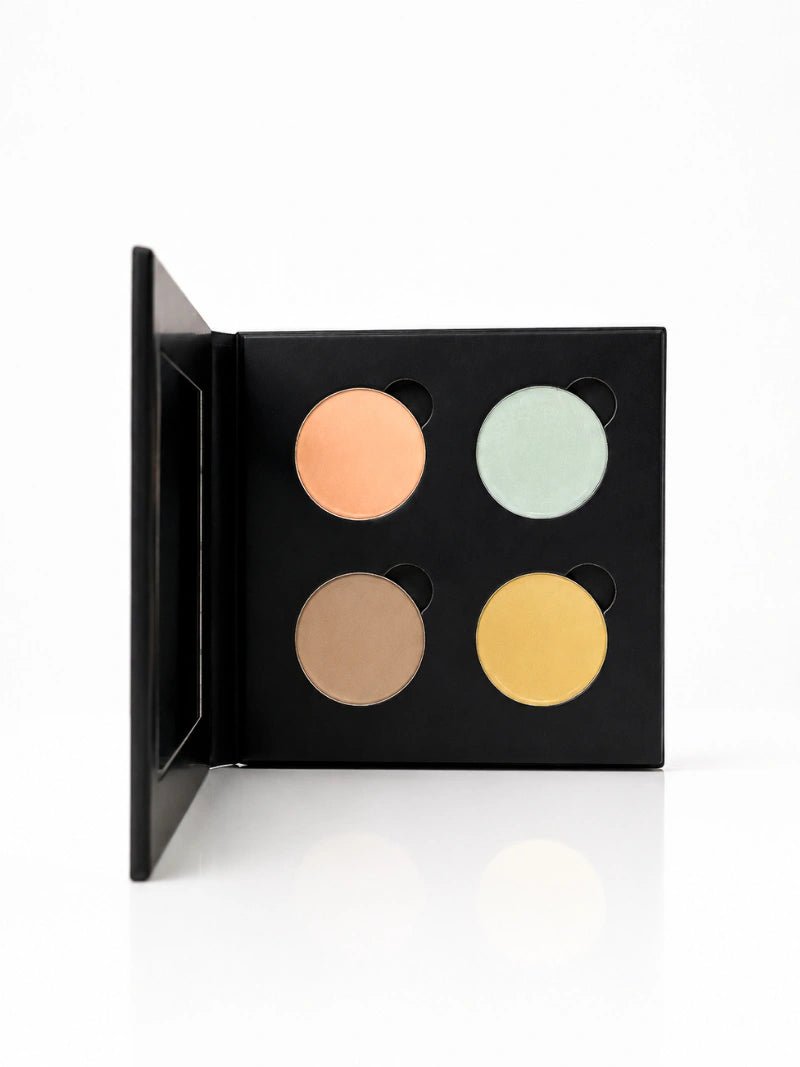
Peach corrector
Peach is ideal when pigmentation looks dull, grey-brown, or slightly shadowed. It can also be helpful when age spots make the complexion look tired or uneven rather than obviously red. Peach adds warmth and life back into the skin while softening discolouration, which makes it particularly beautiful on mature skin that can sometimes look flat under makeup.
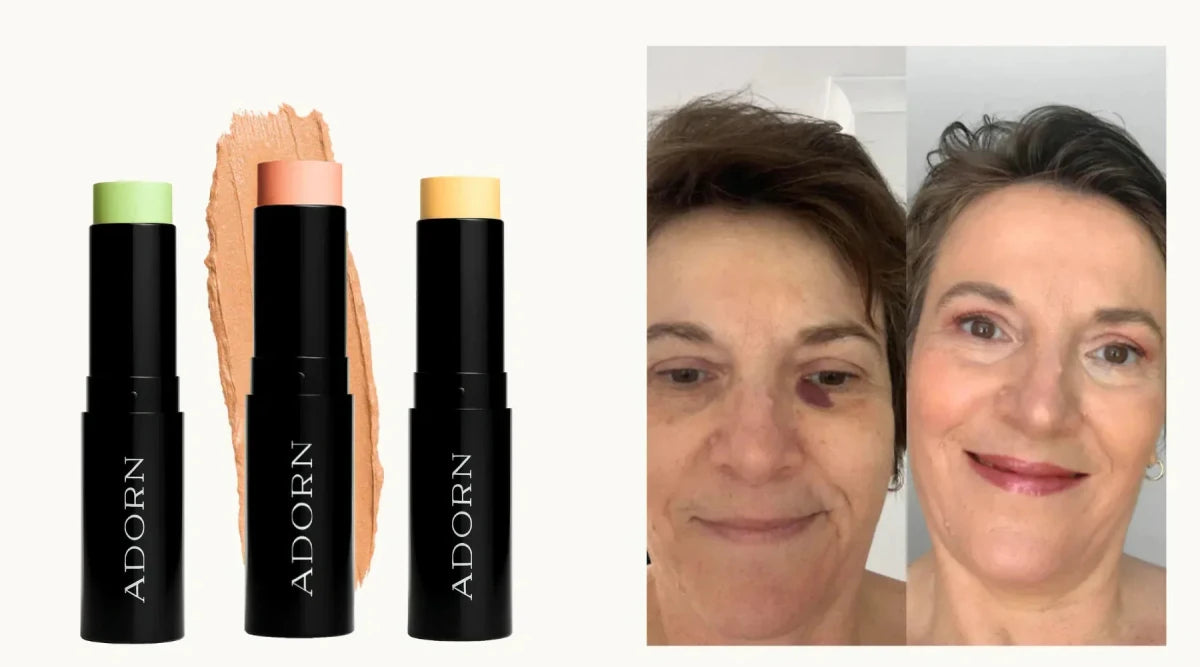
Adorn’s Peachy Sleep Dark Circle Concealer works especially well for these tones. While designed to neutralise under-eye darkness, its peach tone can also help soften dull or grey-brown areas on the face before concealer. The creamy texture is lightweight, flexible, and comfortable, which is exactly what you want when layering on skin that has texture, dryness, or fine lines.

Yellow corrector
Yellow works well when you want to brighten and soften mild pigmentation without adding too much warmth. It can help lift slightly purple, bluish, or cooler-toned discolouration and can also be useful on certain light brown spots where the goal is subtle balancing rather than strong correction.
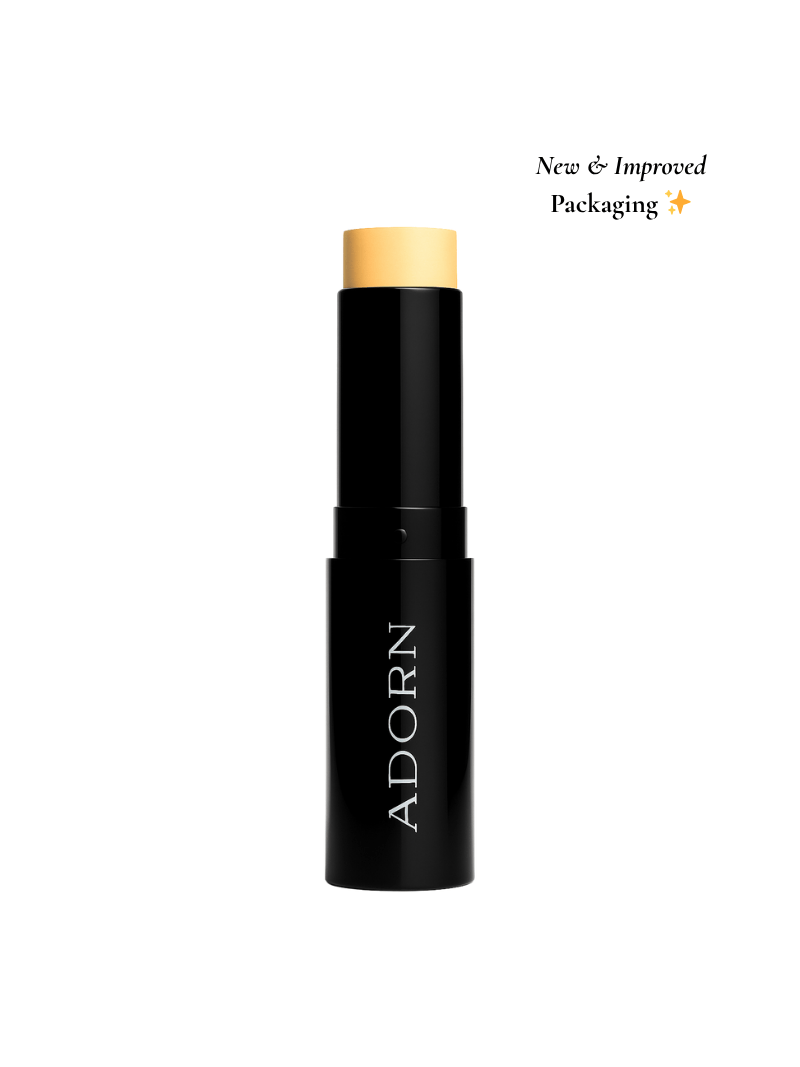
If your pigmentation is not very deep and your skin is looking a little sallow or uneven, a yellow corrector can bring more light to the area before concealer goes on top. Adorn’s Yellow Correction Concealer Stick is a lovely option when you want to brighten strategically while keeping the finish soft and skin-like.

Green corrector
Green is best for redness. If the area around your age spot is inflamed, pink, or visibly red, green will do a better job than peach or yellow. It works by directly counteracting red tones, which makes it especially useful for post-blemish marks, rosacea-prone areas, or patches of irritation that sit alongside pigmentation.
For these concerns, Adorn’s Green Correction Concealer Stick is the one to reach for. It helps calm visible redness so your concealer can sit more evenly on top without needing to overcompensate with extra coverage.

Peach vs yellow concealer for pigmentation
The peach vs yellow concealer conversation comes up all the time because both shades can improve uneven tone, but they do so in slightly different ways.
Peach is generally better when the pigmentation looks ashy, grey-brown, or tired. It brings warmth and helps revive the look of the skin. Yellow is more subtle and brightening. It works well for lighter discolouration, slight sallowness, or when you want to soften a spot without visibly warming the area.
If your age spots make your complexion look flat or dull under makeup, peach is often the more flattering option. If your skin is already warm-toned and you simply want to even out lighter pigmentation, yellow may feel more seamless.
In other words, peach corrects with warmth and revival, while yellow corrects with softness and light.
How to neutralise pigmentation without making makeup heavy
The biggest mistake people make with colour correction is applying too much. The whole point of correction is to reduce the need for excess makeup, not create more layers.
Here is the best way to approach it:
- Start with hydrated skin so product glides on smoothly
- Apply a tiny amount of corrector only where the discolouration is strongest
- Tap it in gently using your fingertip or a small brush
- Let the corrector sit for a moment so it melts into the skin
- Follow with a light layer of concealer only if needed
- Avoid rubbing or dragging, especially on mature skin
You do not need to correct the entire face. Most of the time, strategic placement works best. By keeping the layers sheer and localised, you get a fresher result that still looks like skin.
How to choose the best colour corrector for your skin tone
Skin tone also matters when choosing the best colour corrector for age spots. On fair to light skin, peach is often enough to lift and neutralise dull pigmentation without looking too obvious. On light-medium to medium skin, richer peach or yellow can work beautifully depending on whether the discolouration is cool or warm. On deeper skin tones, stronger orange or deeper peach shades may be more effective than pale correctors that can look chalky.
The goal is always balance. A corrector should soften the discolouration, not leave a visible tint sitting on top of the skin. That is why lightweight cream textures tend to perform so well. They blend more naturally and are easier to build in fine layers.
Best product pairing for a natural finish
If your pigmentation is dull, muted, or grey-brown, start with Peachy Sleep Dark Circle Concealer. Its peach tone is ideal for reviving those flat-looking areas without making the skin look overworked. Because the formula is creamy and flexible, it is particularly lovely on mature skin where comfort and movement matter.
If your concern is visible redness, reach for the Green Correction Concealer Stick. It is your go-to for redness around spots, rosacea-prone areas, or irritated patches that need calming before concealer.
If the pigmentation is lighter or you want to brighten while softening uneven tone, the Yellow Correction Concealer Stick is an easy choice. It adds softness and brightness without too much warmth.
Once the area is corrected, you can follow with your favourite concealer if needed. If you are looking for the best concealer options after correcting, read our guide to the best concealer for mature skin over 60 for more tips on choosing formulas that flatter rather than cake.
Common mistakes when colour correcting age spots
Colour correction can be transformative, but there are a few common mistakes that can make the final result look heavier than it needs to.
- Using too much corrector and creating a thick base layer
- Choosing green for brown spots that actually need peach or yellow
- Applying concealer immediately without blending the corrector first
- Using dry or overly matte formulas on textured skin
- Trying to cover the entire face instead of spot correcting
- Skipping skincare prep and applying product to dehydrated skin
Often, less product and better shade selection will give you a far more elegant finish than simply using more coverage.
So which colour corrector should you use for age spots
If your age spots look brown, flat, or muted, yellow may help brighten them softly. If they look dull, grey-brown, or make the skin appear tired, peach is often the better choice. If you are dealing with redness rather than brown pigmentation, green is the one to use.
That is why there is no single answer for everyone. The best colour corrector for age spots depends on the tone of your discolouration and the finish you want from your makeup.
For many people, especially those with mature skin, peach is the standout because it neutralises dullness while keeping the complexion looking fresh and awake. It is often the missing step when concealer alone keeps falling short.
Learning how to neutralise pigmentation is one of those makeup steps that makes everything else work better. Once you understand what tone you are correcting, you can use less product, create a more natural finish, and stop fighting with concealer that never quite seems to cover enough.
Peach, yellow, and green all have their place. Peach helps revive dull or grey-brown pigmentation. Yellow softly brightens mild uneven tone. Green neutralises redness. The best choice comes down to reading your skin correctly and layering with a light hand.
If you are ready to try a more strategic approach, Adorn’s corrective complexion products make it easy to customise your routine without heaviness. And if you want help choosing the best concealer to layer on top, explore our mature skin concealer guide here.