Perimenopause Skin Changes and How to Care for Your Skin
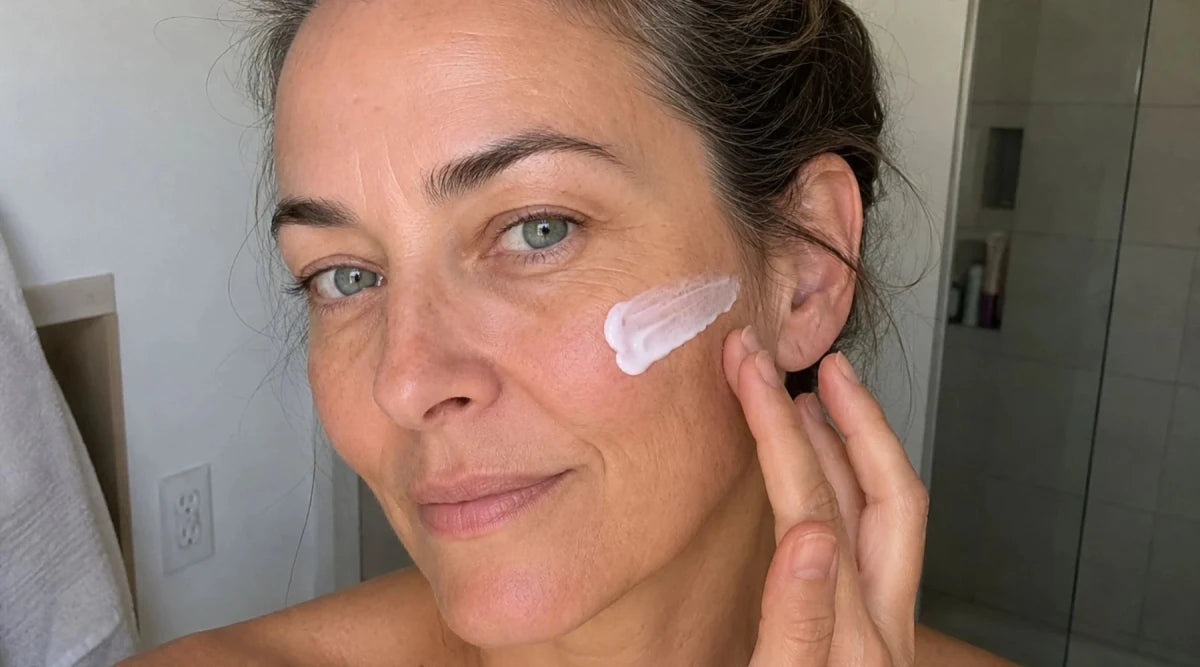
During perimenopause, many women notice their skin looks and feels drier, duller and more sensitive, with fine lines and redness showing more than before — and a gentle, hydrating routine of a mild cleanser, a barrier-supporting moisturiser, a nourishing oil and daily SPF helps keep it comfortable. Explore Adorn's natural skincare for mature skin.
Perimenopause is the transition in the years before menopause, when hormone levels begin to shift. As oestrogen gradually declines, skin makes less oil and less of its own hyaluronic acid and collagen. You don't need to overhaul everything — a few gentle, consistent changes make the biggest difference to how your skin looks and feels.
What changes in the look and feel of your skin
- Drier, tighter feeling — less natural oil means skin can feel parched, especially after cleansing.
- More visible fine lines — lower hydration makes lines and creping look more noticeable.
- Duller-looking tone — cell turnover slows, so skin can look less bright.
- More sensitivity and redness — a weaker barrier reacts and flushes more easily.
- Less bounce — skin can look and feel less firm than it used to.
A gentle perimenopause skincare routine
Morning
- Cleanse with a gentle cream or milk cleanser that doesn't strip.
- Layer a hydrating serum, then a moisturiser for mature skin.
- Finish with a daily mineral SPF.
Evening
- Cleanse to remove makeup, SPF and the day.
- Press in a nourishing face oil or a richer night cream to support the barrier overnight.
Ingredients that support comfort and hydration
- Hyaluronic acid — draws in moisture so skin looks plumper.
- Ceramides — help ease the tight, dry feeling.
- Niacinamide — helps calm the look of redness and even tone.
- Peptides — support the look of firmness over time.
- Bakuchiol — a gentle, plant-based alternative to retinol for sensitive skin.
Makeup that flatters changing skin
Swap heavy, matte formulas for hydrating, buildable ones. A light natural foundation for mature skin over a moisturising primer sits more comfortably and won't settle into lines, while cream blush adds a soft, healthy-looking flush.
Perimenopause skin changes are completely normal. With gentle cleansing, steady hydration, barrier support and daily sun protection, you can keep your skin looking and feeling comfortable right through the transition.
Perimenopause Skin: FAQs
What happens to your skin during perimenopause?
As oestrogen declines, skin makes less oil, hyaluronic acid and collagen, so it often looks and feels drier, duller and more sensitive, with fine lines and redness showing more.
How can I care for my skin during perimenopause?
Keep it gentle and consistent: a mild cleanser, a hydrating serum and moisturiser, a nourishing oil at night, and daily SPF.
Which ingredients help perimenopausal skin?
Hyaluronic acid, ceramides, niacinamide, peptides and gentle bakuchiol all support hydration, barrier comfort and the look of firmness.
Why is my skin suddenly dry and sensitive in my 40s?
Perimenopausal hormone changes reduce the skin's natural oils and barrier lipids, so it loses moisture faster and can react more easily.
Should I change my makeup during perimenopause?
Hydrating, buildable formulas over a moisturising primer tend to look more comfortable and flattering than heavy, matte makeup on drier skin.