Why is my skin still dry after moisturising? Here's what's really going on..
You've been moisturising every morning, every night, maybe even at midday. You're drinking your water. You've switched to a richer cream. Yet your skin is still dry, tight, and flaky under your makeup by 10 am.
If this sounds familiar, you're not doing anything wrong — and you're not alone. "Why is my skin still dry after moisturising?" is one of the most common questions I hear, especially among women over 35 in the cooler months. The answer almost always surprises people.
It's probably not your moisturiser.
Here's what's actually going on — and the simple two-step routine that changes everything.
Why is my skin still dry after moisturising?
When it's cold outside, and the heating's on inside, your skin takes a double hit. Cold air holds less moisture, and indoor heating pulls even more humidity from the air. The result? Your skin's natural cell renewal slows, and a layer of dead skin cells builds up on the surface.
This is where most people's skincare goes wrong. That layer of dead skin forms a physical barrier — not the good kind. It sits between your moisturiser and the fresh, hydrated skin beneath, preventing your products from being absorbed as they should.
No matter how much face moisturiser you apply, it's sitting on top of congestion rather than penetrating where it's needed. You're moisturising dead skin, not your actual skin.
What is transepidermal water loss — and why does it matter?
Here's another piece of the puzzle. When your skin barrier is weakened — by cold weather, heating, age, or the build-up we just mentioned — transepidermal water loss (TEWL) increases. This means moisture escapes through your skin faster than it can be replenished.
You might be adding hydration, but your skin can't hold onto it.
This is especially relevant for women over 30, as our skin's natural ceramide production declines with age. Ceramides are lipid molecules that act like mortar between your skin cells — they're what keep the "bricks" of your barrier together and lock in moisture. When ceramide levels drop, the barrier develops gaps and hydration escapes.
The fix isn't more face moisturiser. It's rebuilding the skin barrier itself.
The two-step dry skin solution: exfoliate, then repair.
Once you understand what's happening, the solution becomes clear. You need to do two things:
- Gently remove the dead skin build-up that's blocking your face moisturiser.
- Replenish your skin barrier so it can actually hold onto hydration.
This is exactly what Adorn's two-step winter skincare routine is designed to do.
Step 1: Clear the way with gentle exfoliation
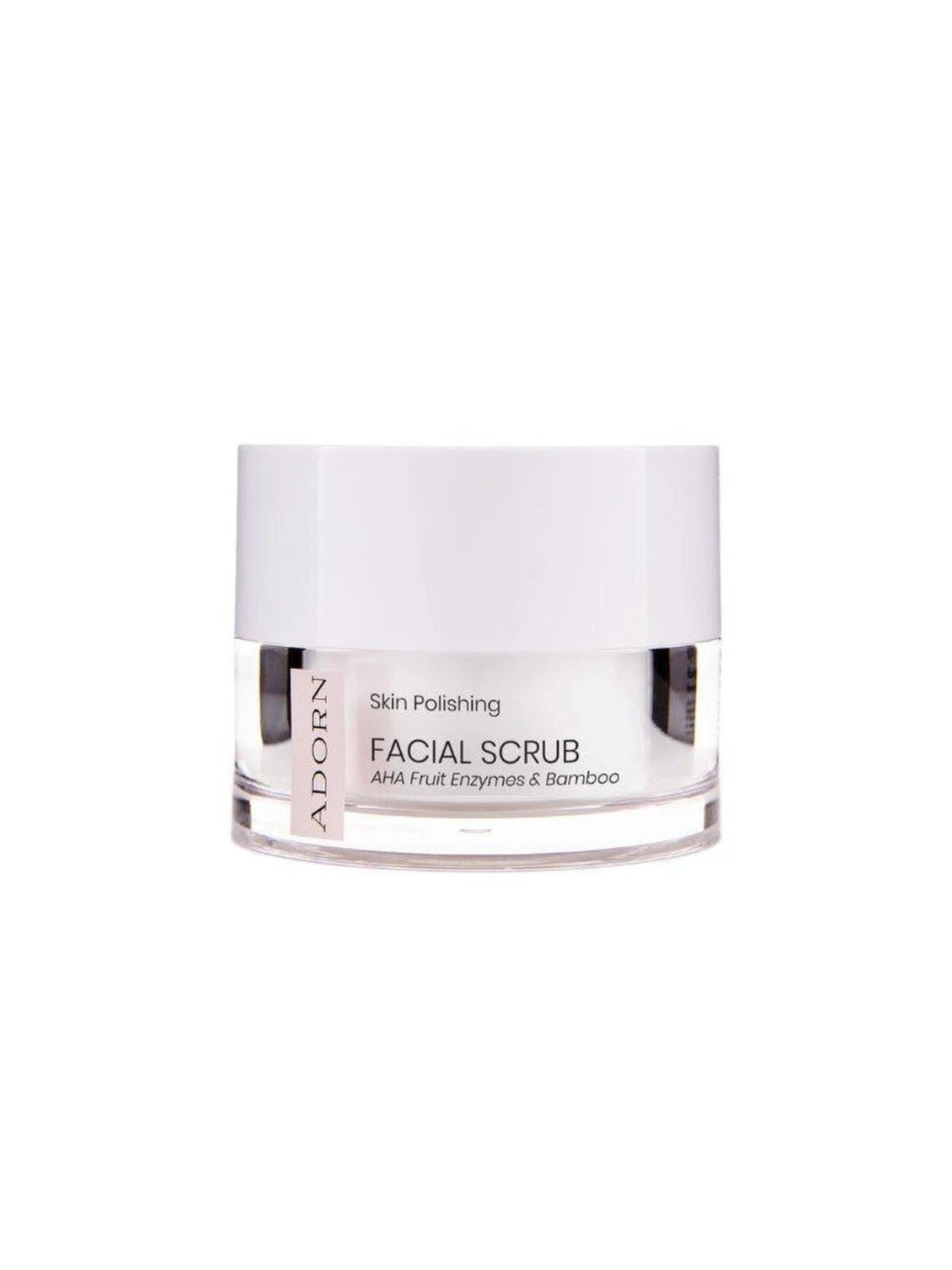
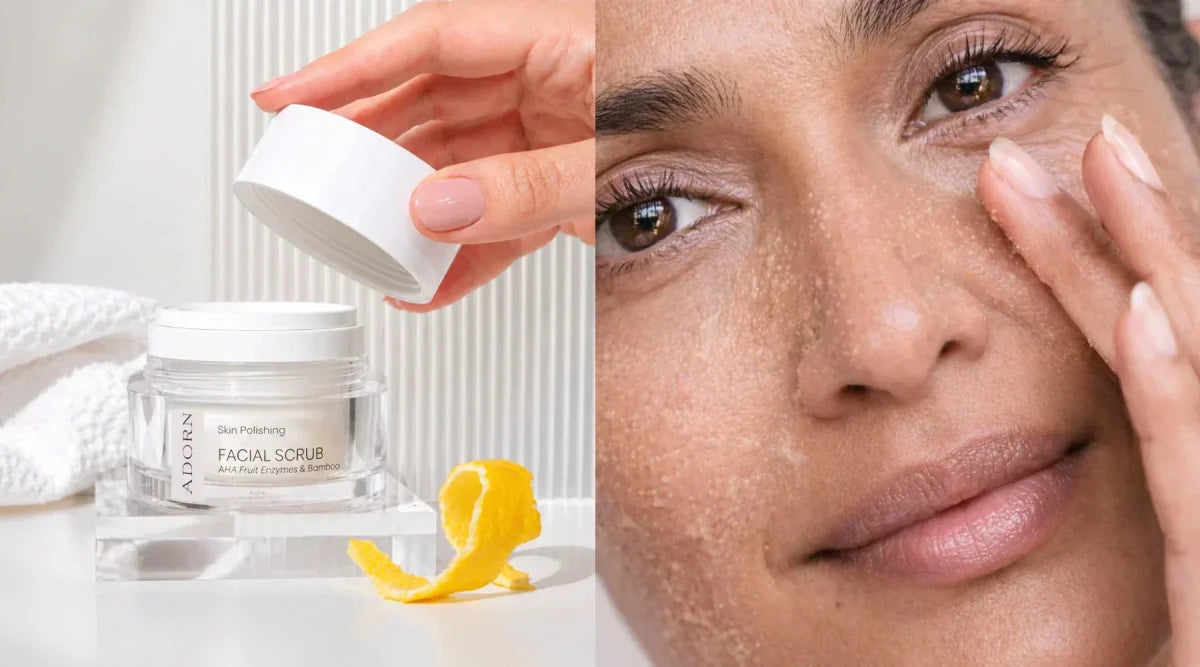
Adorn Cosmetics Bamboo AHA Fruit Enzyme Face Scrub

The key word here is gentle. Over-exfoliating, especially in winter, can further damage your skin barrier and worsen dryness. What you want is a mild enzyme exfoliant that dissolves dead skin cells without stripping or irritating.
Our Bamboo AHA Fruit Enzyme Face Scrub combines AHAs and natural fruit enzymes with finely milled bamboo to gently buff away surface build-up without causing micro-tears. It's specifically formulated for mature and sensitive skin types, so it clears congestion without leaving your skin vulnerable.
Use it 1–2 times a week in your evening routine. That's enough to make a noticeable difference without overdoing it.
After exfoliating, your skin is ready — free of the dead skin cell layer that's been blocking everything.
Step 2: Repair skin barrier with ceramides
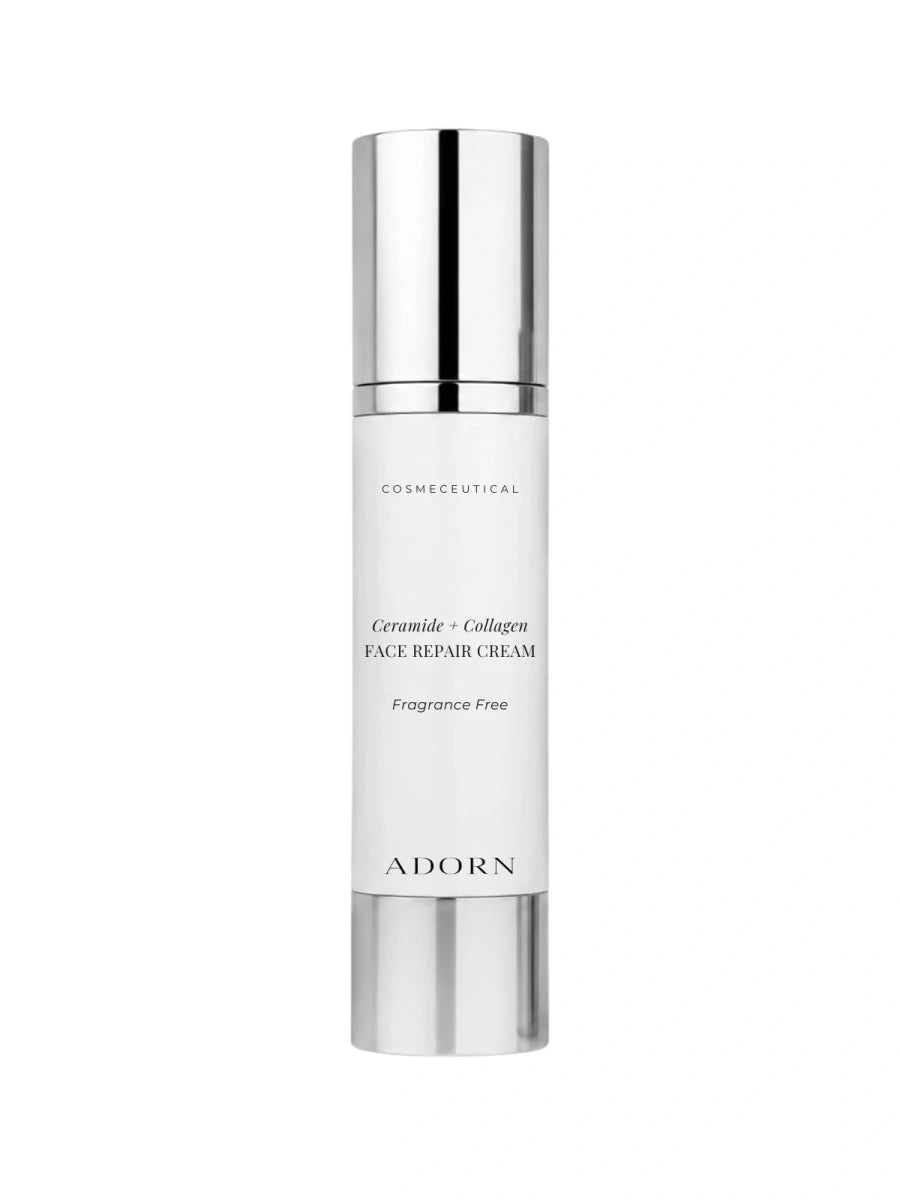
Adorn Cosmetics Ceramide + Collagen Face Repair Cream

This step makes everything else work. Apply your Ceramide + Collagen Face Repair Cream immediately after exfoliating, while your skin is still slightly damp.
Ceramides work by replenishing the lipid structure of your barrier — they fill the gaps that allow moisture to escape. When your ceramide levels are topped up, your skin stops losing hydration and starts retaining it. You'll notice your skin feels softer, more comfortable, and plumper — not just temporarily, but throughout the day.
The collagen in this formula supports skin elasticity and firmness, which is especially valuable for mature skin that tends to lose resilience in winter.
Why apply immediately after exfoliating? Because freshly exfoliated skin absorbs active ingredients more effectively. The timing isn't an accident — this is the sequence that gives you the best possible result from both products.
How often should you use this routine?
For most skin types, exfoliating 1–2 times a week is ideal. On the nights in between, use your Ceramide + Collagen Repair Cream alone — it's rich enough to use as your primary evening moisturiser and will continue to support your barrier function with consistent use.
Most people notice softer, more comfortable skin within 1–2 weeks. Barrier repair takes a little longer — give it 3–4 weeks of consistency to see the full difference.
Other reasons your skin might still be dry after moisturising
While dead skin build-up and a compromised barrier are the most common culprits, a few other factors can contribute:
You're applying moisturiser to completely dry skin. Moisturisers work best on skin that's slightly damp — they seal in existing moisture rather than adding it from scratch. Try applying your cream within a minute or two of cleansing.
Your moisturiser is too lightweight for winter. A gel or water-based lotion that worked well in summer often isn't occlusive enough in the cooler months. Switch to a richer cream with barrier-supporting ingredients.
Hot showers. They feel amazing in winter, but hot water strips your skin's natural oils and weakens the skin barrier. Try turning it down slightly and keeping showers shorter when you can.
You're over-cleansing. Washing your face twice a day with a foaming cleanser can strip your skin barrier, especially in winter. A gentle, hydrating cleanser once in the evening is often enough.
A note from a customer
"I used to reach for a heavier moisturiser every winter and wonder why nothing changed. The moment I started exfoliating first — gently, just once a week — everything shifted. My moisturiser finally had somewhere to go. That's exactly what these two products were designed to do together, and it's the routine I still use today."
— Pauline T. Age 67
The simple winter skin reset — in summary
If your skin is still dry after moisturising, here's the honest answer: your moisturiser is probably doing its job. The problem is the layer of dead skin on top and the weakened barrier that can't retain moisture.
The fix is simple:
Exfoliate gently → remove the build-up that's blocking your products. Repair the barrier → replenish ceramides so moisture can actually stay
Do this 1–2 times a week, and give it 3–4 weeks of consistency. Your winter skin will thank you.
Ready to try the routine? Shop the Bamboo AHA Fruit Enzyme Face Scrub and Ceramide + Collagen Face Repair Cream at Adorn Cosmetics. Australian made, vegan, and refillable.
Dry Skin Frequently Asked Questions
Why is my skin dry in winter even though I moisturise every day? The most common reason is a build-up of dead skin cells that prevents your moisturiser from being absorbed properly, combined with a weakened skin barrier that can't retain moisture. Gentle exfoliation followed by a ceramide-rich repair cream addresses both issues.
How often should I exfoliate dry skin in winter? Once or twice a week is ideal for most dry and sensitive skin types in winter. More than this can strip your skin barrier and worsen dryness. Choose a gentle enzyme exfoliant rather than a harsh physical scrub.
What do ceramides do for dry skin? Ceramides are lipids that form the "mortar" between your skin cells, keeping your barrier intact and locking in moisture. When ceramide levels drop — which happens naturally with age and in cold weather — moisture escapes more easily, leaving skin dry even after moisturising. Restoring ceramide levels helps your skin retain hydration.
Is my moisturiser making my dry skin worse? Some moisturisers can contribute to dryness if they contain alcohol, fragrance, or stripping ingredients. In winter, a lightweight gel or lotion may also be too light to protect your barrier. Look for a cream with ceramides, collagen, or hyaluronic acid.
Can I use the Bamboo Scrub and Ceramide Cream in the same routine? Yes — this combination is specifically designed to work together. Exfoliate first to remove dead skin build-up, then apply the Ceramide + Collagen Repair Cream immediately afterwards, while the skin is receptive. Use this routine 1–2 times a week for best results.
Adorn Cosmetics is proudly Australian made, vegan, cruelty-free, and refillable. Founded in 2008, we create clean beauty products designed for real women — including those of us navigating the particular joys of skin after 35.